


Air fryer do's and don'ts
Air fryer safety tips
Air fryer safety tips: the do’s and don’ts every home cook should know. This quick guide explains how to use an air fryer safely and cook with confidence.
Air Fryer Do’s
-
Read your model’s instructions
Not all air fryers are the same. Read the manual first so you understand controls, ventilation, accessories, and cleaning for safe, consistent results. Retain the manual for future reference.
-
Check the voltage before you plug in
Match the rating label on your air fryer to your outlet voltage to avoid damage and electrical hazards.
-
Supervise young or assisted users
Children aged 8+ and anyone needing help should only use the air fryer with close supervision and clear safety guidance about heat and steam.
-
Supervise cleaning by older kids
If children over 8 help with cleanup, supervise them—baskets and trays can stay hot and correct reassembly matters for next use.
-
Unplug a damaged or dropped unit
If the cord, plug, or any part of the unit is damaged—or the unit was dropped—unplug immediately and stop using it until a professional checks it.
-
Keep everything dry before use
Operate with dry hands and ensure the plug, socket, air fryer base, basket, and tray are completely dry before you cook.
-
Disconnect safely if it gets wet
If the appliance or cord is immersed, unplug from the wall immediately—without reaching into the water—and have it inspected before reuse.
-
Unplug by the plug
Switch the air fryer off and remove it from the mains by holding the plug, not the cord, to protect internal connections.
-
Cook food—nothing else
Use the air fryer only for cooking food as intended; that’s how you get the safest, most consistent results.
-
Use accessories designed for your model
Stick to the basket, tray, and accessories supplied or approved for your specific air fryer model to maintain airflow and protect coatings. Make sure any accessories used are weighed down by food.
-
Use it indoors
Operate the air fryer inside only—indoor conditions protect electronics from moisture and weather exposure.
-
Store it smart
Keep your air fryer in a cool, dry place and bring it out to a clean, clear workspace when cooking.
-
Turn off, unplug & clean after every cook
When not in use—and before cleaning—turn the air fryer off, unplug it, let it cool completely, then wash the basket and tray after every use and wipe the interior.
-
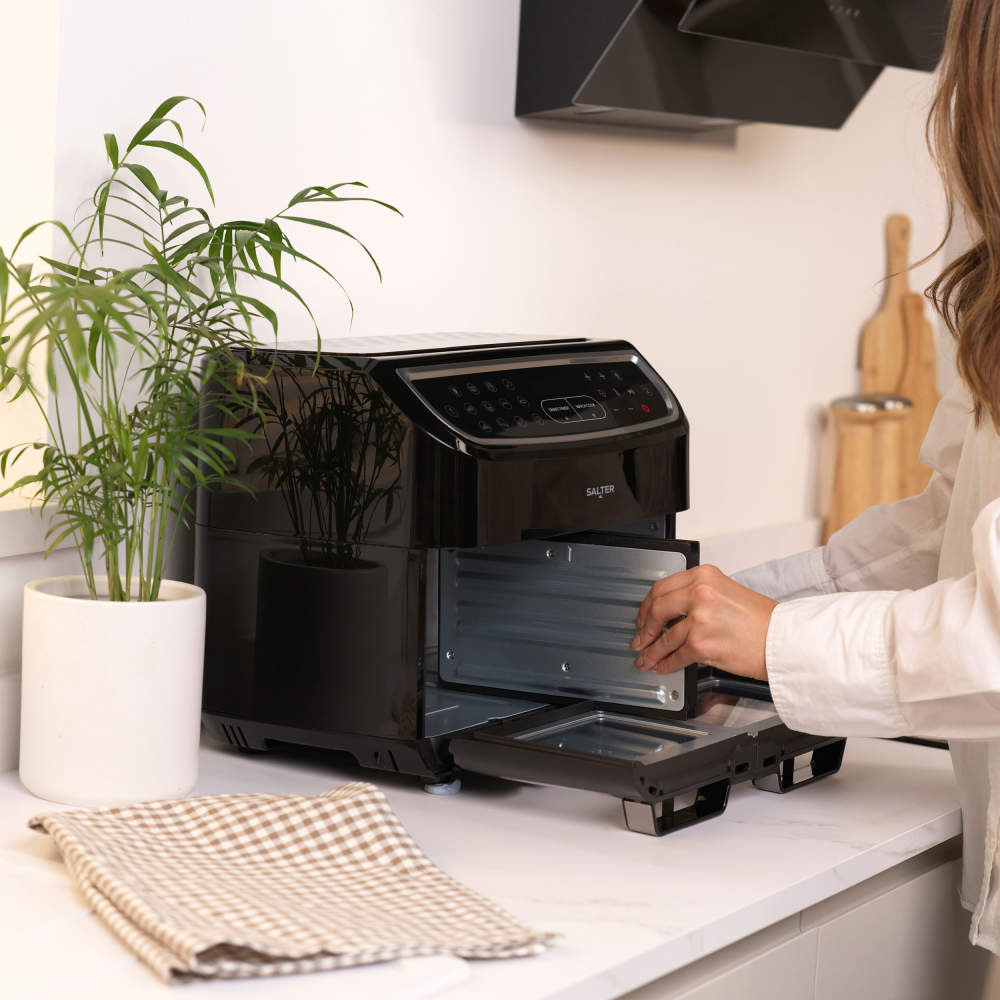
Use a stable, ventilated, heat-safe surface
Place the air fryer on a level, heat-resistant surface with ventilation clearance— at least 20cm away from walls, cupboards, and flammable items—to prevent tipping and heat damage.
-
Use it for home cooking
Air fryers are intended for domestic use; for heavy, continuous service choose equipment rated for commercial kitchens.
Air Fryer Don’ts
-
Don’t let children play with it—it’s not a toy
Keep curious hands away to prevent burns and accidents.
-
Don’t place it within children’s reach—or let them near when hot
Position the unit so it can’t be pulled by its cord and block access to children while operating or cooling.
-
Don’t place it on or next to the hob during use or storage
Avoid stove-tops, hot hobs, ovens, or sharp edges—heat and damage risks are high here.
-
Don’t let the cord touch hot parts
Keep the power cord clear of the air vents and panels, which get warm during cooking.
-
Don’t crowd or block vents
Give the air fryer space away from other heat-emitting appliances so ventilation and performance stay on point.
-
Don’t let the cord hang or twist
Avoid cords dangling over worktops, touching hot surfaces, or becoming twisted—these are trip and heat risks.
-
Don’t immerse the air fryer in water
Only wash removable parts like the basket and tray—the main unit must never be submerged.
-
Don’t fill it with soapy water to “self-clean”
Never add water or cleaning products to the drawer and run the unit—unplug and hand-wash removable parts instead. If there is any hard to remove food residue or oils in the basket, fill the basket with warm soapy water and leave to soak away from the main unit.
-
Don’t leave it unattended
Stay nearby while in use so you can respond quickly to smoke, odours, or alerts.
-
Don’t carry it by the cord
Lift the appliance with both hands after it’s unplugged and cool—the cord is not a handle.
-
Don’t move it mid-cook
Shifting the unit during operation can spill hot juices, tip the appliance, and disrupt airflow.
-
Don’t use external timers or remote controls
Operate the air fryer directly so you can monitor heat, time, and safety in real time.
-
Don’t plug it into an extension cord
Plug the air fryer directly into a wall socket; extension leads can overheat and create trip hazards.
-
Don’t overfill or use excess oil
Stay within the basket’s max fill line and use only the oil the recipe calls for to avoid smoke and spills.
-
Don’t use baking paper or tin foil in the air fryer
Loose parchment or foil can obstruct airflow or contact the heating element—skip them for safety.
-
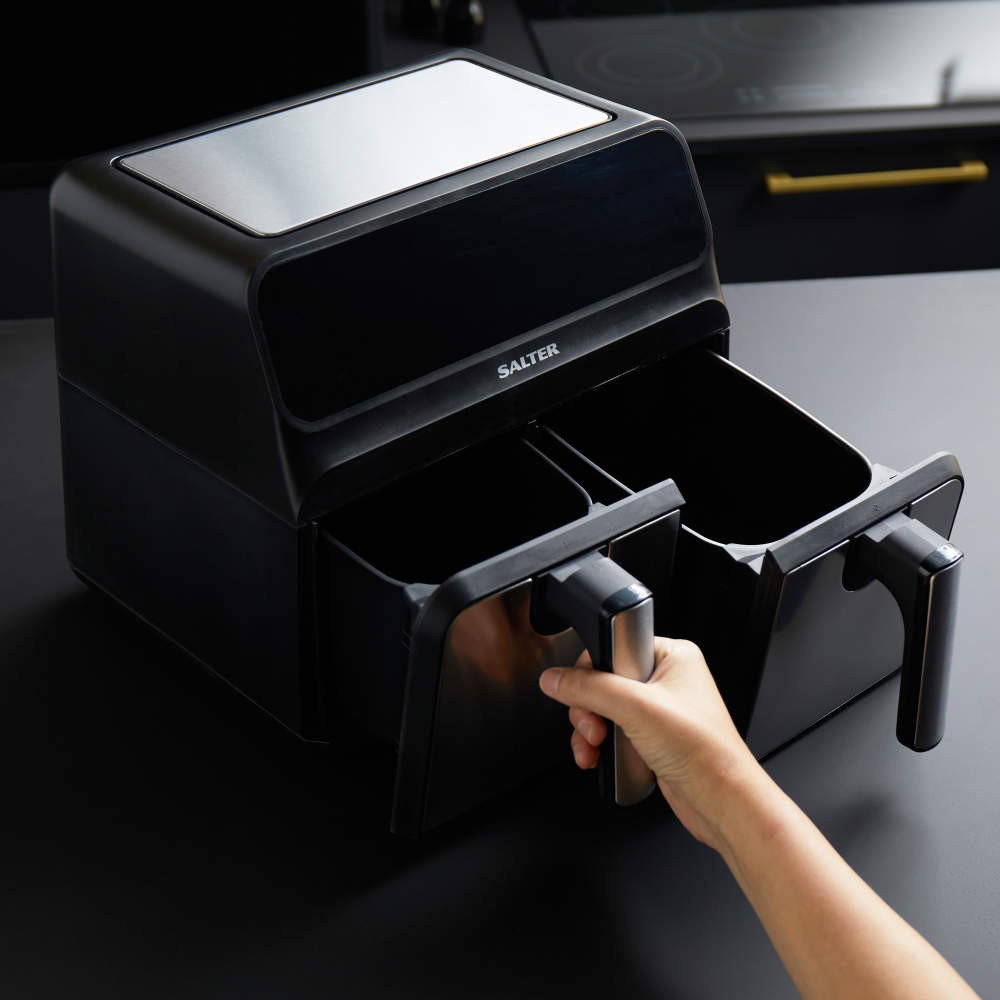
Don’t place anything on top of the air fryer
 GERMANY
 FRANCE
 ITALY
ITALY SPAIN
SPAIN NETHERLANDS