

Everything You Need To Know About Cast Iron Cookware
Posted by Team Salter on 17th Nov 2026
Everything You Need To Know About Cast Iron Cookware
Cast iron cookware is loved for its ability to retain heat, cook evenly and adapt to a variety of recipes. From golden, perfectly seared ingredients to rich, slow-cooked dishes, it’s a versatile choice for everyday cooking. With simple seasoning and maintenance, cast iron can provide years of reliable performance in the kitchen.
Introduction
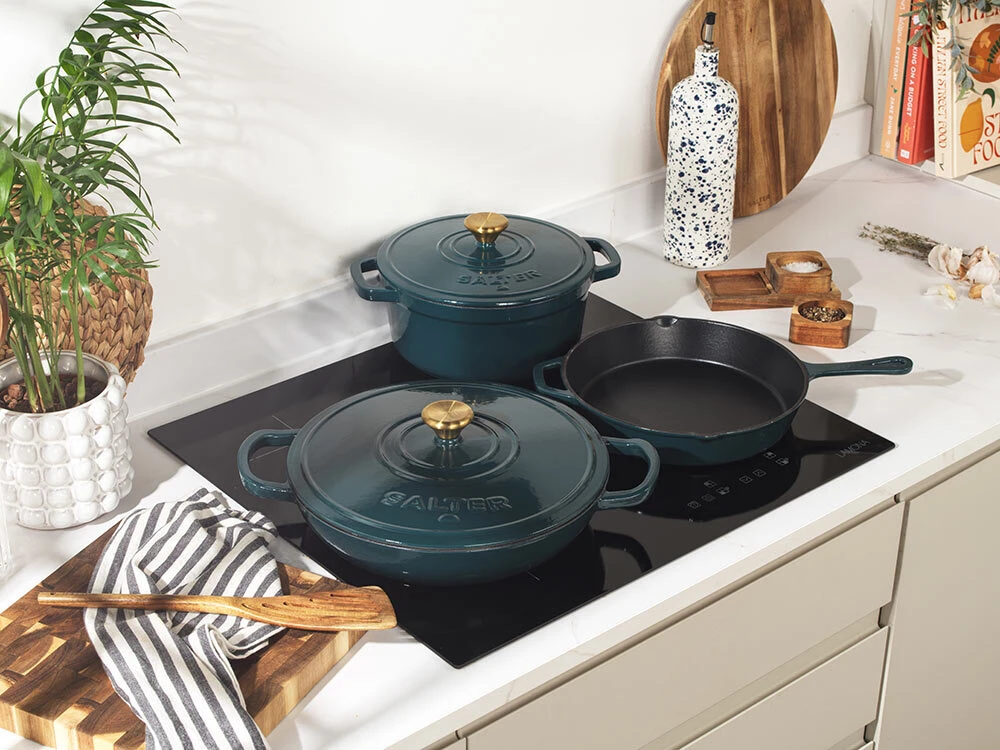
Cast iron cookware has been loved in kitchens for generations, and for good reason. Cast iron is built to last, incredibly versatile, and great at retaining heat, cast iron cookware can help you tackle everything from a quick midweek meal to a slow-cooked Sunday dinner.
If you’re new to cast iron, don’t worry. While it can seem a little different to other cookware, thanks to its unique seasoning process and slightly different care requirements, it’s surprisingly simple to use once you know the basics. In this guide, we’ll share our top tips to help you cook with confidence and keep your cast iron performing at its best.
What is Cast Iron Cookware?
Cast iron cookware is made by pouring molten iron into moulds, it creates strong, durable cookware that’s built to last and can become a staple in your kitchen for years to come.
There are two types of cast iron cookware:
- Bare cast iron has a natural iron surface and is often associated with traditional cast iron cooking. Over time, it develops a protective layer known as seasoning, which helps maintain its performance. Bare cast iron can withstand extremely high temperatures, including use on barbecues and under grills, and metal utensils can generally be used. However, it does require a little more care when cleaning and maintaining.
- Enamelled cast iron features a strong enamel coating applied over the cast iron, creating a smooth, protective surface. It doesn’t require seasoning, is suitable for cooking acidic ingredients like tomatoes and wine-based sauces and is generally easier to clean. If you’re new to cast iron cookware, enamelled cast iron can be a great place to start, offering many of the benefits of traditional cast iron with less maintenance.
Whether you’re discovering cast iron for the first time or adding to an existing collection, it’s easy to see why this classic cookware material has remained a favourite with home cooks for centuries.
What is Cast Iron Good For?
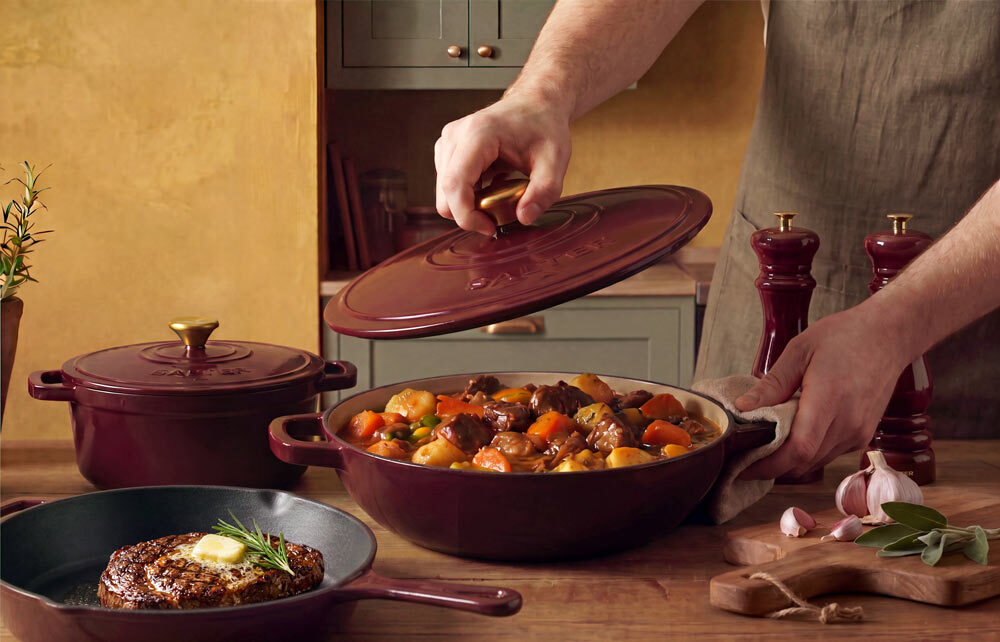
One of cast iron’s standout qualities is its ability to retain and distribute heat evenly. Thanks to its dense construction, it absorbs heat efficiently and helps reduce hot spots across the cooking surface, creating more consistent cooking results. This makes it particularly well suited to dishes that benefit from steady, reliable heat, from perfectly seared meats to gently simmered sauces.
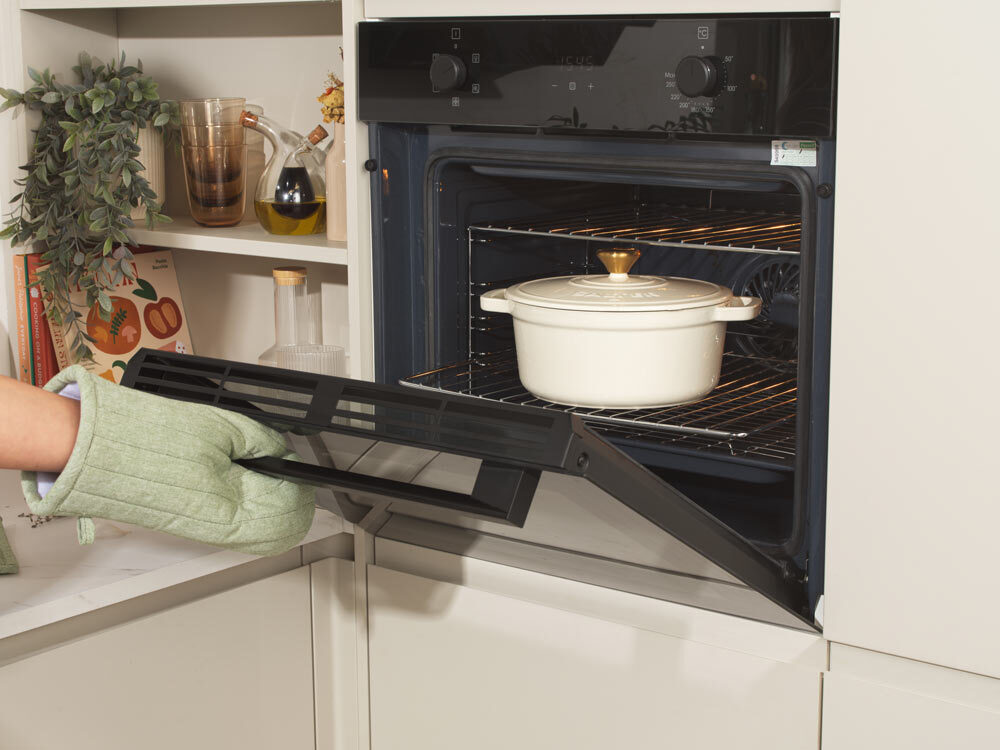
Cast iron has stood its test of time thanks to its incredible versatility. Whether you’re preparing a quick weeknight dinner or taking your time over a slow-cooked recipe, cast iron is designed to handle it all, giving you the flexibility to sear, fry, roast and simmer in a single piece of cookware. Even better, many cast iron pieces can transition effortlessly from hob to oven to table, offering a convenient way to cook, serve and present your favourite dishes.
Enamelled cast iron pots are especially popular for slow-cooking, helping lock in moisture and flavour while creating rich, comforting dishes. Cast iron frying pans, meanwhile, are perfect for achieving a golden finish on everything from steaks and chicken to vegetables and halloumi.
Which Hobs Can You Use Cast Iron On?
One of the biggest advantages of cast iron cookware is its compatibility with a wide range of hob types.
Most cast iron cookware can be used on:
- Induction hobs
- Gas hobs
- Ceramic hobs
- Electric hobs
- Solid plate hobs
- Oven-safe
While most cast iron is suitable for most cooking surfaces, it’s always worth checking the manufacturer’s instructions before first use. As cast iron is heavier than other cookware materials, taking care when moving it across glass or ceramic surfaces can help prevent scratches.
How to Season a Cast Iron Pan
If you’re using traditional bare cast iron cookware, seasoning is an important part of caring for it. Seasoning simply means applying a thin layer of oil to the surface and heating it until it bonds with the iron. This helps build a protective coating and improves the cooking surface over time.
To season a cast iron pan:
Wash and thoroughly dry the pan
Apply a thin layer of cooking oil across the entire surface
Remove excess oil with a clean cloth
This prevents an uneven cooking surface.
Place the pan upside down in a preheated (230'C) oven for 30 minutes
Take the pan out and repeat steps 2-4, three to four times
Enamelled cast iron cookware, like our Salter Chester collection, doesn’t require regular seasoning, making it a great option for those who want the benefits of cast iron with less maintenance.
How to Clean a Cast Iron Pan
Cleaning cast iron is often simpler than people expect.
For enamelled cast iron, allow the cookware to cool before washing with warm water, mild washing-up liquid and a soft sponge or cloth. Avoid using abrasive scourers, as these can damage the enamel finish over time.
For bare cast iron, it’s best to avoid soaking the pan for extended periods and ensure its dried thoroughly after washing to help prevent rust.
Here’s a few simple tips to keep your cast iron cookware looking its best:
- Allow cookware to cool before cleaning
- Avoid sudden temperature changes
- Use wooden, silicone or heat-resistant utensils where possible
- Dry thoroughly before storing
- Store in a dry place
With the right care, cast iron cookware can provide a reliable cooking performance for decades.
Conclusion
Cast iron cookware remains a kitchen favourite and for good reason. Durable, versatile and built to last, it’s a dependable choice for everything from everyday dinners to special occasions.
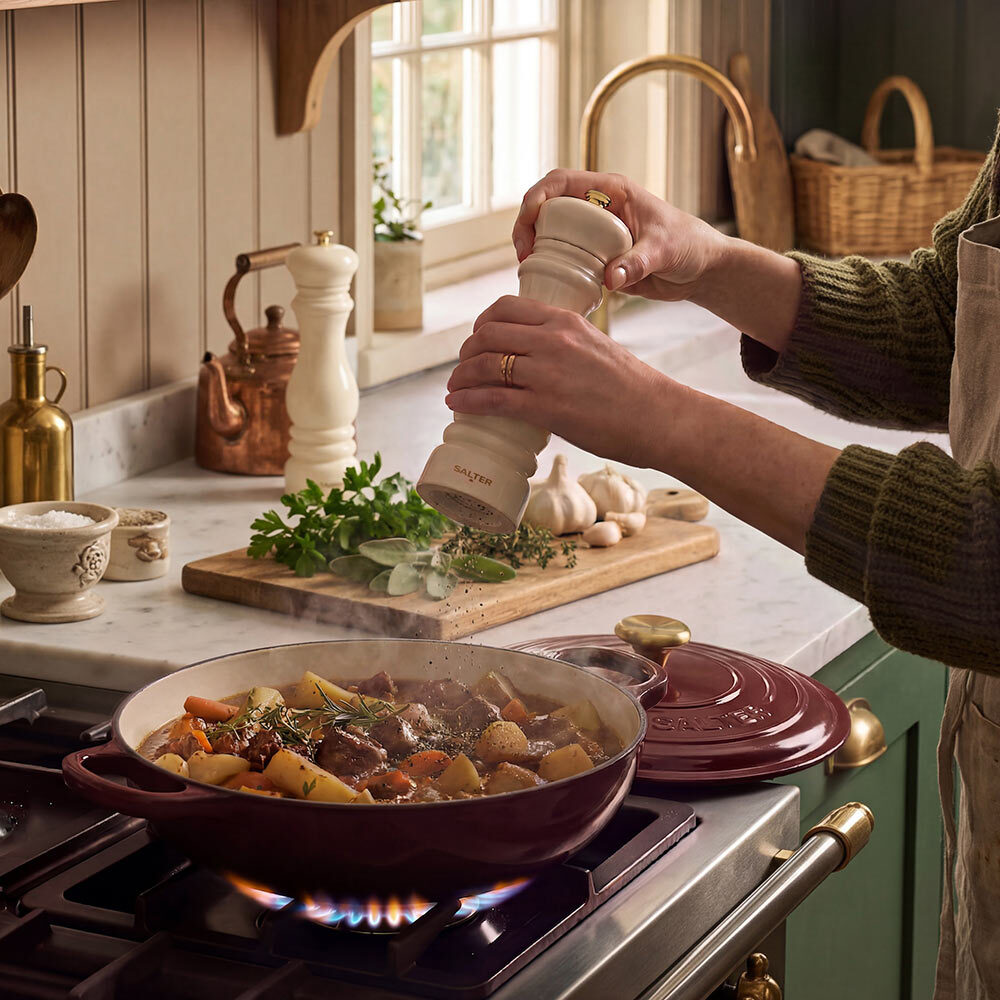
Whether you’re cooking with a cast iron frying pan or serving up a hearty casserole from an enamelled cast iron pot, investing in quality cookware can help make every meal a little more enjoyable. And with collections like Chester, you can enjoy the timeless appeal of cast iron alongside convenience and style needed for modern-day cooking.
Frequently Asked Questions
If rust does appear, gently scrub the affected area with washing up liquid and a nylon sponge, then dry thoroughly. Applying a small amount of oil afterwards can help protect the surface and prevent the rust from returning.

 GERMANY
 FRANCE
 ITALY
 SPAIN
 NETHERLANDS